
QUALITY SYSTEM
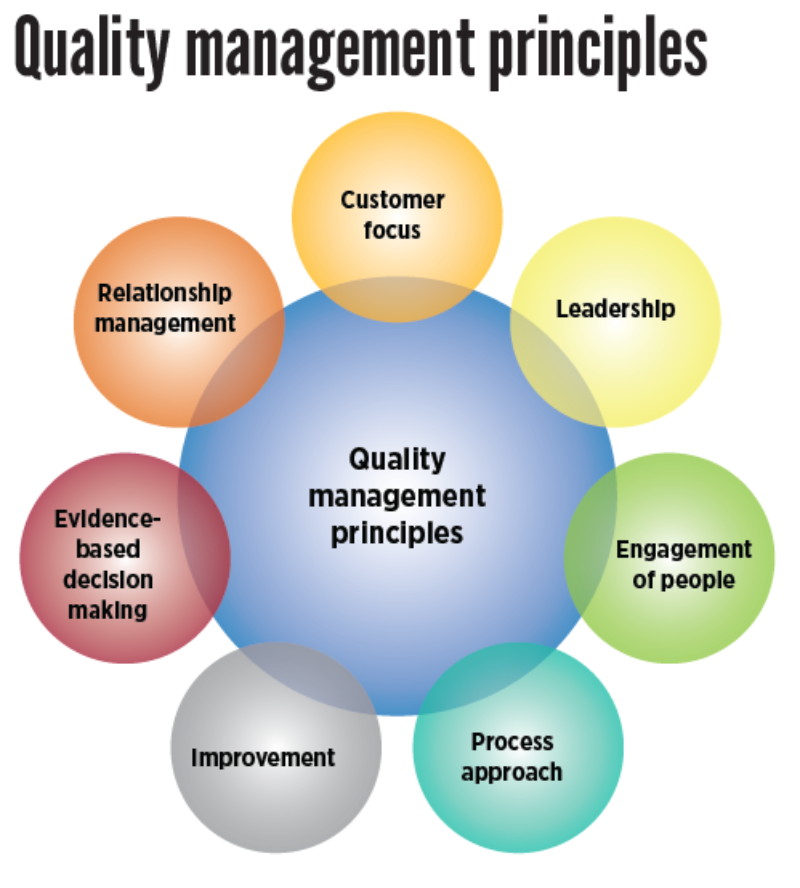
Customer focus, leadership, engagement of people, process approach, improvement, evidence-based decision making and relationship management.
QUALITY MANAGEMENT PRINCIPLES
Our quality approach is structured around the seven principles shown in the diagram. Each principle supports consistent execution, informed decisions and lasting customer confidence.
Understanding customer requirements and expectations helps align quality, technical execution and service with what matters to the customer.
Leadership provides direction, establishes quality expectations and creates an environment where people can contribute to consistent performance.
Competent and engaged people are essential to reliable execution. Collaboration and ownership strengthen the quality culture.
Viewing activities as interconnected processes helps control interfaces, improve consistency and understand how inputs influence outcomes.
Continual improvement encourages learning from experience, identifying opportunities and strengthening systems over time.
Decisions should be supported by reliable information, data, scientific understanding and appropriate risk assessment.
Strong relationships with customers, suppliers and technical partners support reliable supply, communication and long-term value.
QUALITY COMMITMENT
Quality considerations are intended to remain connected to development, technical decisions, documentation and customer interaction rather than being treated as a separate activity.